

When someone searches for «happy-ending queens» they are usually looking for stories in which a queen — literal or symbolic — reaches a satisfying resolution: restoration, triumph, love, or a meaningful transformation. They want closure that honors the character’s journey and the stakes she faced. That expectation shapes how we read fantasy sagas, historical dramas, fairy tales, and contemporary fiction.
This article unpacks the trope, why it resonates, how it has evolved, and practical ways writers and readers can recognize a well-earned happy ending for a queenly character. Along the way I’ll offer examples, common patterns, and a short checklist you can use to judge whether an ending feels earned rather than convenient.
What people mean by a «happy-ending queen»
A «happy-ending queen» is an archetype rather than a rigid label. It can be a literal monarch who regains or secures her throne, a leader whose struggles end in justice, or a woman whose arc concludes with personal peace, family reconciliation, or moral triumph. The common thread is resolution that rewards effort, sacrifice, or growth.
Readers use the phrase in different contexts. In fairy tales it often means marriage, coronation, or escape from peril. In modern fantasy or historical fiction it can mean political victory, vindication after exile, or the healing of a fractured realm. The nuance matters: a coronation that follows manipulation feels hollow; a modest domestic peace can feel profound if the character overcame systemic wrongs.
How the trope developed: a brief cultural history
Stories about rulers and their fates are ancient. Early myths rewarded rightful rulers returning to power; medieval romances tied queenship to moral order; and fairy tales simplified conflict into endings where virtue is visibly rewarded. Those patterns shaped a cultural expectation that leadership, especially in female form, should culminate in restoration or fulfillment.
Over the last century, writers have complicated the model. Twentieth-century fantasy often preserved the happy coronation as symbolic closure. Late twentieth- and twenty-first-century narratives began to interrogate what «happy» means when a queen inherits a corrupt system or when power itself exacts a cost. The result: both celebrations of triumph and deliberate subversions that force readers to rethink satisfaction.
Why happy endings for queens resonate
There are several emotional reasons readers respond strongly to a satisfying resolution for a queenly figure.
- Closure: Political and personal arcs are entwined. A resolved throne dispute or healed relationship ends plot tension and emotional uncertainty.
- Justice: When a queen has been wronged—exiled, usurped, betrayed—a happy ending signals moral balance restored.
- Representation: Seeing a woman exercise agency and receive a meaningful reward counters familiar narratives that minimize female leadership.
- Hope: Stories about rulers often stand in for social aspirations; a peaceful, capable queen can be a hopeful image for readers facing real-world instability.
But «happy» is not synonymous with untroubled. The most satisfying endings usually acknowledge cost. The queen who sits on the throne after a brutal war can be triumphant and haunted. That complexity often deepens the emotional payoff.
Patterns that produce satisfying queenly endings
Several narrative patterns reliably yield endings readers call «happy.» These are not prescriptions but tools: used honestly, they feel earned; used cheaply, they read as contrived.
Restorative arc: the rightful ruler returns and restores order. The emotional satisfaction comes from regained identity and reclaimed justice. Redemptive arc: a flawed ruler atones and rebuilds trust; here happiness is moral rejuvenation rather than simple victory. Domestic arc: the queen finds personal peace—reconciliation with family or a renewed sense of purpose—proving that rule can include intimacy. Transformational arc: the queen sacrifices conventional power but gains autonomy, safety, or a new life, turning a political loss into a human win.
Examples and how they work
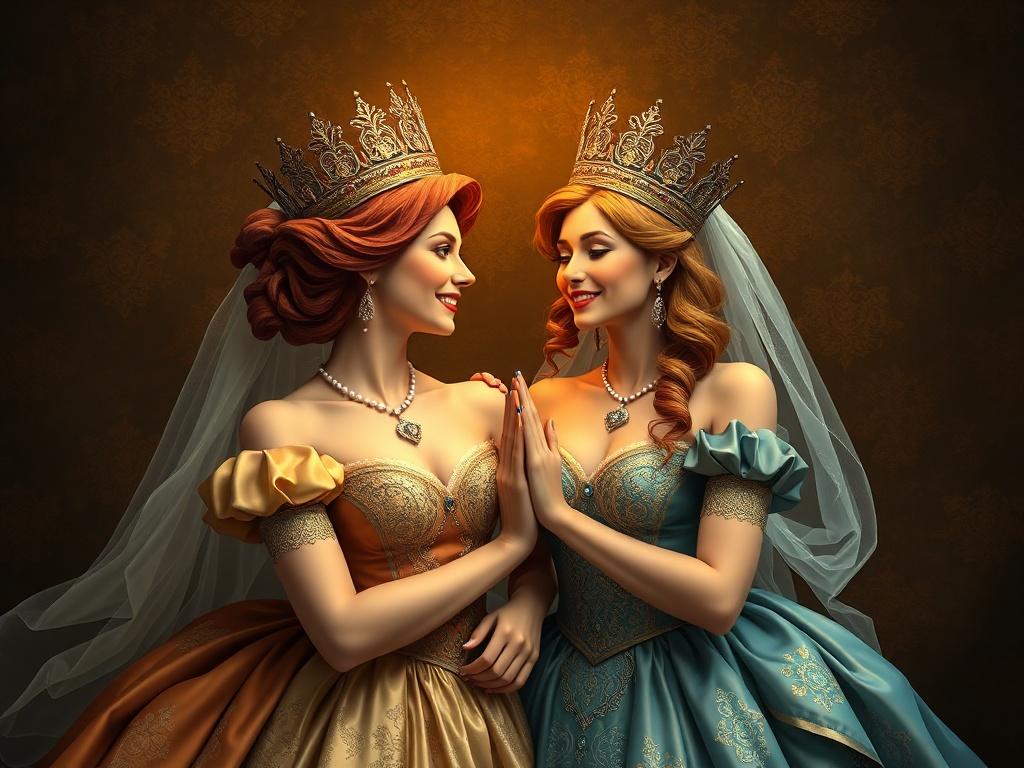
Examples make the patterns concrete. The table below compares recognizable cases across genres and highlights what makes each ending feel satisfying or intentionally unsatisfying.
| Story | Queen | Ending Type | Why it resonates or subverts |
|---|---|---|---|
| Cinderella (traditional tales) | Cinderella | Elevation to queen by marriage | Transformation and justice—poverty to stability—simple but emotionally clear. |
| The Lion, the Witch and the Wardrobe (C.S. Lewis) | Lucy Pevensie (Queen Lucy the Valiant) | Restorative coronation | Childhood innocence rewarded; order restored after tyranny. |
| The Lord of the Rings (J.R.R. Tolkien) | Arwen | Transformational/marriage into queenship | Chooses mortality for love; bittersweet but thematically aligned with sacrifice. |
| Brave (Pixar) | Queen Elinor | Domestic reconciliation | Healing family bonds reframes leadership as relational strength. |
| Game of Thrones (TV) | Daenerys Targaryen | Subversion—tragic fall | Challenges the idea of tidy justice; leaves moral questions unresolved. |
Crafting an earned happy ending for a queen: a writer’s guide
If you’re a writer aiming for a satisfying resolution for a queenly character, the key is earned consequence: tell the truth of the character’s arc and make sure the ending follows naturally from choices already on the page.
Start by clarifying what your story promises. Is it political intrigue, a personal journey, or both? Align the ending with that promise. If your story has emphasized public stakes, the ending should address them. If the heart of the book is a parent-child relationship, a quiet reconciliation can be more powerful than a coronation.
Concrete techniques

- Track the cost: show what the queen sacrificed to reach the ending and let readers feel that cost—material or emotional.
- Resolve central conflicts: important subplots should contribute to the main resolution; loose threads can hollow out satisfaction.
- Honor agency: the queen should make meaningful choices, not simply be acted upon. Agency makes triumph credible.
- Allow ambiguity selectively: a dash of bittersweet realism can enhance rather than undermine pleasure—if the primary promise is still fulfilled.
- Avoid deus ex machina: solutions that appear from nowhere weaken the payoff. Let the character’s skills, relationships, or sacrifices produce the outcome.
Pitfalls and false gratifications
Not all happy-seeming endings feel right. Several common mistakes turn what should be satisfying into unsatisfying shorthand.
Instant rehabilitation is one: a queen who commits grievous acts and is forgiven without reckoning leaves readers distrustful. Another is token elevation—a coronation scene that ignores persistent injustice feels cosmetic. Finally, replacing political resolution with romance can cheapen political sagas unless the romance genuinely resolves the character’s core conflict.
Diverse and modern takes on the trope
Contemporary storytellers have expanded what a happy ending can mean for queens. Some narratives place emphasis on inclusivity and structural change rather than individual coronation. Others center the emotional well-being of the ruler—mental health, community rebuilding, or abdication into a life of purpose—rather than crown-centered triumph.
These variations reflect a cultural shift: power is no longer automatically the apex of happiness. For many readers today, a queen’s contentment, the fair treatment of citizens, or meaningful reform can be a more satisfying resolution than formal power alone. Writers who honor those possibilities find fresh ways to satisfy modern readers.
A short checklist for readers and writers
- Does the ending address the central conflict the story set up?
- Has the queen’s agency been preserved or earned?
- Are consequences shown for major choices, good or bad?
- Does the ending match the story’s emotional promise (romance, justice, peace)?
- Is there a sense of forward motion—does the future of the realm or relationships feel plausible?
Answering yes to most of these usually means the ending will feel satisfying to readers seeking a «happy-ending queen.»
Conclusion
A genuine happy ending for a queen balances promise with consequence: it rewards effort, recognizes cost, and honors the story’s emotional focus. Whether it arrives as coronation, reconciliation, or an unexpected form of freedom, a satisfying resolution is less about crowns and more about truth to the character’s journey. Writers who respect that truth give readers not only closure, but the quieter pleasure of justice felt and struggles redeemed.