

If you’re hunting for a Manhattan with a little extra flourish — richer, slightly bitter, and with an aftertaste that keeps you coming back — a “Happy Ending” Manhattan is exactly what you want. This piece will point you to the kinds of bars in Manhattan that are most likely to serve a smart riff and walk you through how to build the drink at home, so you can taste the difference for yourself.
Below you’ll find clear recipes, flavor notes, ordering tips, and a quick rundown of places in New York that craft Manhattans with care. Read on whether you’re a curious beginner, a home bartender refining technique, or a traveler looking for the best cocktail stop in the city.
What is a Happy Ending Manhattan?
A Happy Ending Manhattan is not a fixed historic recipe but rather a contemporary riff on the classic Manhattan. Bartenders achieve the “happy ending” by introducing a bitter-sweet element — often an amaro or a liqueur — that layers extra herbal complexity over the base whiskey and vermouth. The result is a cocktail that keeps developing across the sip instead of resolving quickly.
Think of it as the classic Manhattan’s older, more mysterious cousin: it keeps the backbone of whiskey and sweet vermouth but invites an extra dimension — caramel, citrus peel, bitter herbs — so the finish lingers. That small change transforms the balance and broadens what the cocktail can express.
Classic Manhattan versus the Happy Ending riff: ingredients and flavor
The classic Manhattan is elegant and straightforward: whiskey (rye or bourbon), sweet vermouth, and bitters. Its charm lies in the clean interplay of oak, spice, and fortified wine. The Happy Ending version adjusts that interplay by adding a small measure of amaro or herbal liqueur and sometimes an orange or chocolate bitters to sharpen the finish.
Below are typical ingredient lists and what they contribute to the flavor profile.
- Base spirit: rye delivers spice and bite; bourbon offers rounder, sweeter notes.
- Vermouth: sweet vermouth provides fruity, fortified-wine richness.
- Amaro or liqueur (the Happy Ending twist): adds bitterness, herbal complexity, or candied notes depending on the choice (Averna, Montenegro, Cynar, Amaro Nonino, etc.).
- Bitters and garnish: Angostura for depth; orange bitters and an expressed orange peel for brightness; a Luxardo cherry for richness.
These small adjustments give the Happy Ending Manhattan a more layered, salon-like finish than a straightforward Manhattan, and they make it interesting to sip slowly.
Quick comparison: classic and popular riffs
The table below compares a classic Manhattan to several common riffs, including the Happy Ending approach. Use it to decide which direction to try first.
| Variant | Base Spirit | Modifiers | Typical Ratio | Flavor Profile |
|---|---|---|---|---|
| Classic Manhattan | Rye or Bourbon | Sweet Vermouth, Angostura | 2 oz spirit : 1 oz vermouth : 2 dashes bitters | Spicy, rounded, fortified-wine sweetness |
| Happy Ending Manhattan | Rye (or Bourbon) | Sweet Vermouth + small Amaro (Averna/Montenegro), Angostura, orange bitters | 2 oz spirit : 0.5–1 oz vermouth : 0.5 oz amaro : bitters | Herbal-bitter finish, layered sweetness, lingering citrus/herbal notes |
| Black Manhattan | Rye | Amaro replacing or supplementing vermouth | 2 oz spirit : 1 oz amaro : bitters | Darker, more bitter, herbal-forward |
| Smoked Manhattan | Rye or Bourbon | Sweet Vermouth, smoked or flamed garnish | 2 oz spirit : 1 oz vermouth : bitters | Oaky smoke layered over classic sweetness |
Where to try the best Happy Ending Manhattans in Manhattan (bars that get it right)
If you want someone else to do the stirring and to taste a cocktail through a professional lens, seek out established cocktail bars and hotel lounges in Manhattan. These places prioritize balanced drinks, good ice, and experienced bartenders who can adapt a Manhattan riff to your preferences.
Look for bars known for craft cocktails, small plates, and serious bartending. Classic hotel bars, speakeasies, and high-caliber craft cocktail rooms are the likeliest sources of thoughtfully executed riffs. When you arrive, mention whether you prefer sweeter, drier, or more bitter finishes — a good bartender will tune the Happy Ending to suit you.
- Smaller craft cocktail rooms and speakeasies — expect bespoke riffs and seasonal twists.
- Hotel bars — reliably staffed with experienced bartenders who balance classics and contemporary variations.
- Neighborhood cocktail bars with a rotating menu — useful for sampling a house version of a Manhattan riff.
- Restaurants with a strong cocktail program — often pair drinks to food, which can highlight the drink’s finish.
Bars worth checking (what to expect)
Iconic New York bars often put their own stamp on classics. Many of them tailor Manhattans to the season — swapping the amaro or bitters — but they share a commitment to technique: stirred over clear, cold ice and strained into a chilled glass. Expect polished service and a tasting pour that reveals the finishing note the bartender intends.
When you order, say whether you like rye or bourbon and whether you’d enjoy a more bitter finish; telling the bartender you want a “Happy Ending” Manhattan should be enough for them to suggest a house version or adapt a classic for you.
How to order and what to expect when you ask for a Happy Ending Manhattan
Ordering is straightforward but conversational. Tell the bartender you’d like a Manhattan with an extra bitter-sweet finish — call it a “Happy Ending” Manhattan and add your spirit preference. If the bartender seems puzzled, describe the flavor you want: “more herbal” or “more chocolate-caramel” and they’ll choose an amaro or tweak the vermouth ratio.
Price will vary with the bar and the base spirit. High-end rye or small-batch amari will push the price up, but a well-made Manhattan is worth the extra for technique and quality ice. Expect a properly chilled cocktail served in a coupe or rocks glass with a Luxardo cherry or an expressed orange peel.
How to read the menu and customize
Menus at craft bars will often list the specific amaro or vermouth used. If you prefer less sweetness, ask for a drier pour of vermouth or a touch more amaro. If you like it sweeter, ask for a higher vermouth ratio or for a richer cherry garnish. A clear line of communication gets you closer to the drink you want.
Keep in mind that many bartenders enjoy creating a bespoke drink; a short note about your taste will usually be met with enthusiasm rather than resistance.
Make a Happy Ending Manhattan at home: tools, technique, and the full recipe
At-home preparation is satisfying and simple if you respect a few details: use good ingredients, stir rather than shake, and chill properly. The same basic tools you use for a classic Manhattan will do: mixing glass, bar spoon, jigger, strainer, and a coupe or rocks glass chilled ahead of time.
Ice quality matters more than people expect. Large, clear cubes dilute slowly and keep the drink balanced. Stir until the cocktail is well-chilled and slightly diluted — about 20–30 turns depending on ice size and temperature.
Home bar checklist
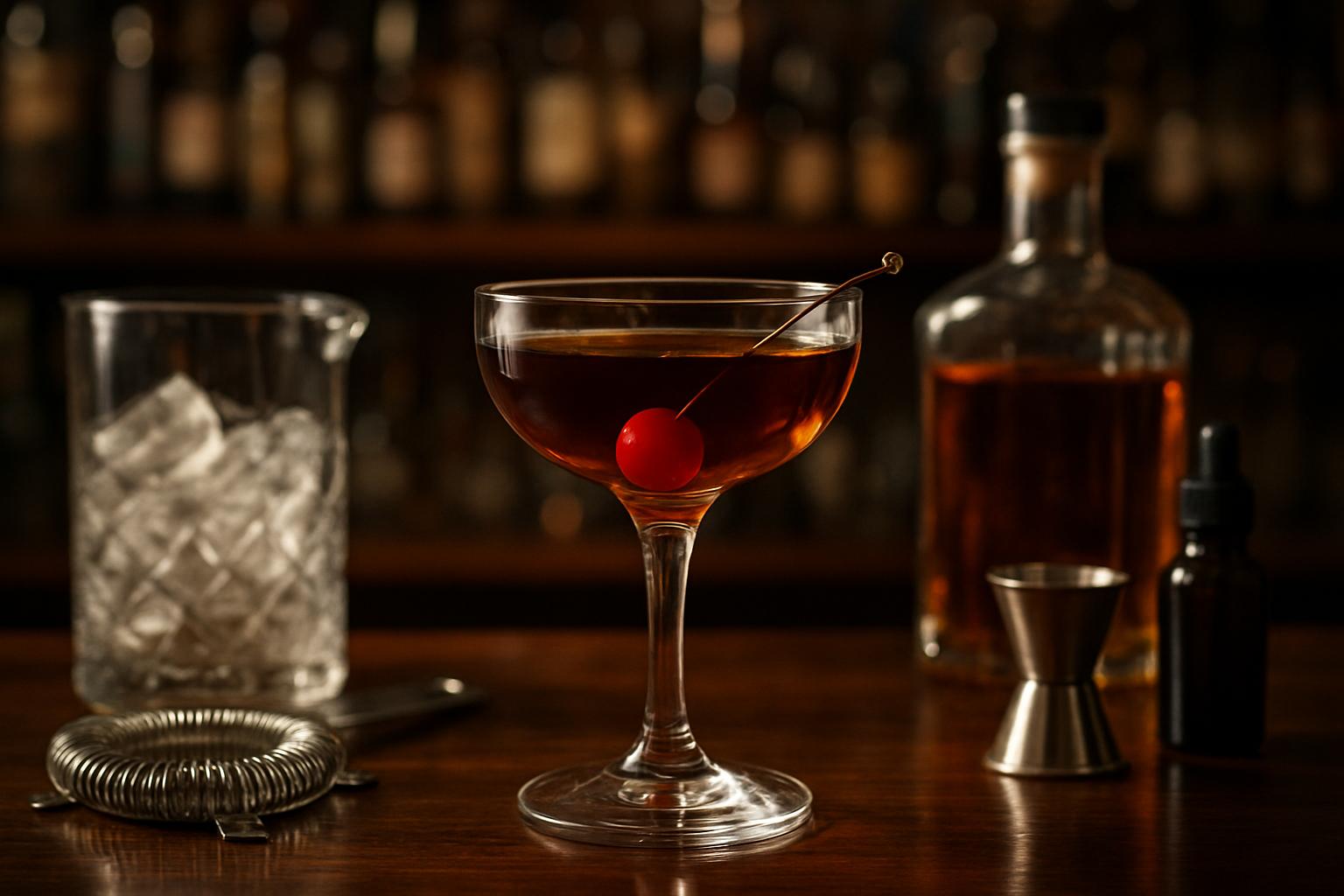
- Mixing glass and bar spoon
- Jigger for accurate measures
- Hawthorne or julep strainer
- Large clear ice cubes or an ice mold
- Coupe or chilled rocks glass
- Quality rye or bourbon, sweet vermouth, and an amaro of choice
Recipe: Best Happy Ending Manhattan (home version)
This balanced home recipe preserves the Manhattan’s structure while adding the amaro note that creates the “happy ending.” Adjust the amaro amount up or down by a quarter-ounce depending on whether you want more bitterness or a subtler finish.
Ingredients:
- 2 oz rye whiskey (or bourbon if you prefer richer sweetness)
- 0.75 oz sweet vermouth
- 0.5 oz amaro (Averna, Montenegro, or Amaro Nonino work well)
- 2 dashes Angostura bitters
- 1 dash orange bitters (optional)
- Luxardo cherry or expressed orange peel for garnish
Method:
- Fill a mixing glass with large ice cubes.
- Add whiskey, vermouth, amaro, and bitters.
- Stir steadily for 20–30 revolutions until the outside of the glass frosts and the mixture is well chilled.
- Strain into a chilled coupe or rocks glass over a single large cube.
- Express an orange peel over the drink and drop it in, or garnish with a Luxardo cherry.
Taste and tweak: if the cocktail leans too bitter, increase vermouth by 0.25 oz or reduce the amaro slightly. If it’s too sweet, shave the vermouth or swap to a drier amaro. Remember that small changes make meaningful differences.
Pairings and serving suggestions
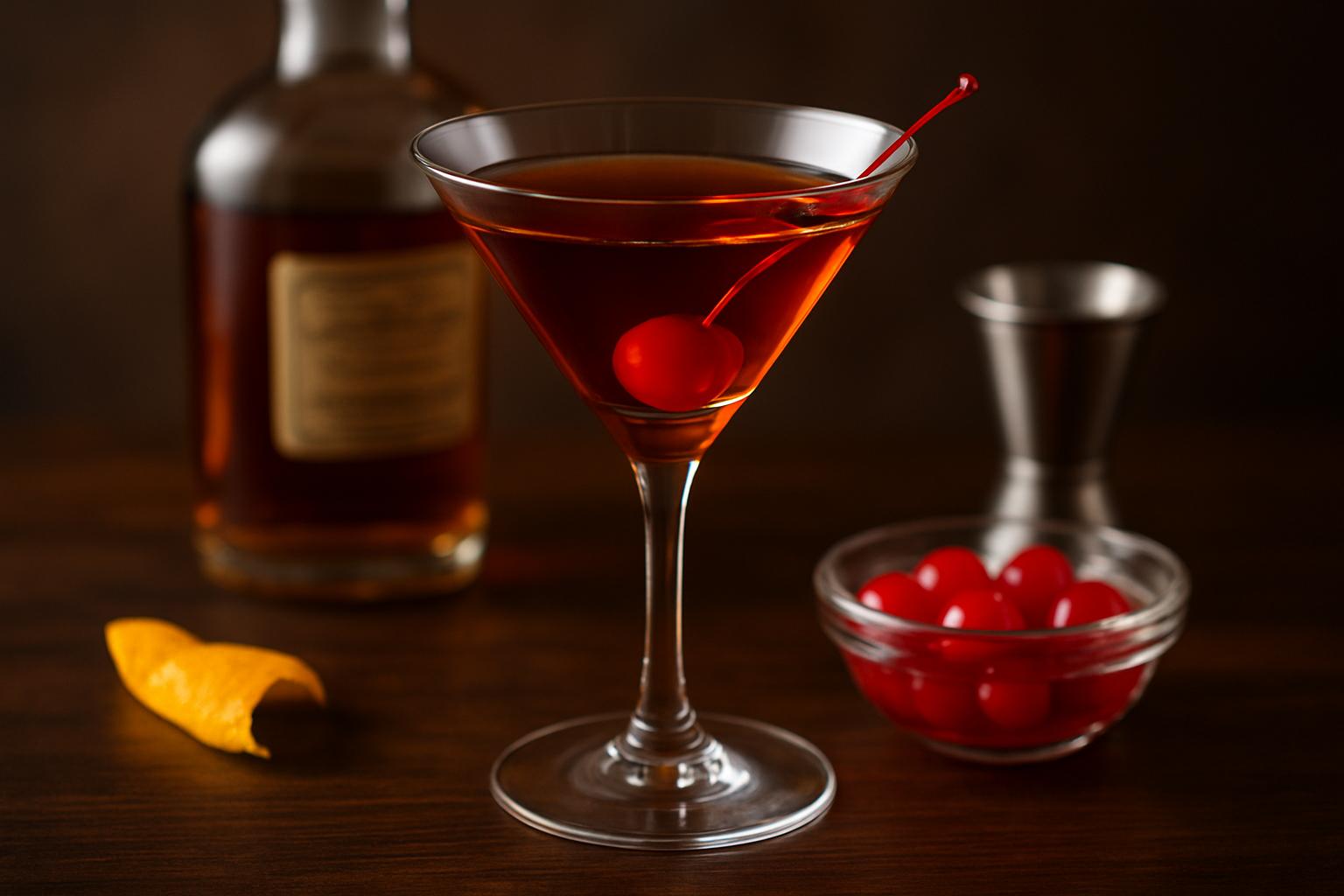
The Happy Ending Manhattan pairs beautifully with foods that can stand up to its layered profile: aged cheeses, charcuterie, dark chocolate, smoked meats, and richer small plates. The cocktail’s bitter-sweet finish cleanses the palate while the spirit’s warmth complements fatty or savory bites.
Serve it as an evening aperitif or alongside a late dinner. Because the flavors are pronounced, serve slightly smaller pours for a sipping experience rather than a session drink.
Final tips from bartenders
1) Use fresh vermouth and store it refrigerated; oxidized vermouth will dull the delicate finish. 2) Measure — a jigger keeps balance consistent. 3) Stir patiently; technique trumps theatrics for spirit-forward cocktails.
Finally, experiment. Try different amaros and vermouths, switch rye for bourbon, or alter garnish choices. Each small change will reveal a new facet of the Happy Ending Manhattan and help you find the version you love best.
Conclusion
A Happy Ending Manhattan is a thoughtful twist on a classic: one small addition — a measured splash of amaro, a different bitters choice, or a complementary garnish — transforms the finish and invites slow, attentive sipping. Whether you’re tasting one at a skilled Manhattan cocktail bar or crafting your own at home, focus on balance, fresh ingredients, and patient technique; that’s the real secret to a satisfying “happy ending.”